
A Census-balanced Survey (n=1500) About Anti-Social Behaviour on Social Media
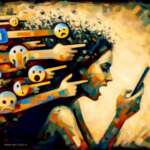
TORONTO — Around the world and here in Canada, users are grappling with the impending normalization of aggressive behaviour, hostility, and toxic discourse in online spaces that demand more precise attention and interventions from policymakers, social media platforms, researchers, and civil society organizations.
According to a new report, "The State of Anti-Social Behaviour on Social Media" released today by the Social Media Lab at Toronto Metropolitan University, 31% of Canadians (472/1500) report experiencing at least one type of anti-social behaviour sometimes or more often on social media.
"Anti-social behaviour is so normalized in our online spaces today," said Gruzd, an author on the report. "Left unattended, the normalization of certain types of aggressive anti-social behaviour, such as hate speech, can erode public trust and confidence in democracy itself."
Using a census-balanced sample (n=1500) of the Canadian population (18+), the authors of this report, Anatoliy Gruzd, Jaigris Hodson, Jenna Jacobson, Philip Mai, Victoria O’Meara, and Felipe Soares, aim to empirically shed light on this dangerous trend by analyzing how anti-social behaviour manifests on social media and how it affects different demographic groups in Canada.
Among other findings, the survey shows that members of minority groups are more likely to experience anti-social behaviour on social media. For example 42% of racialized individuals, 47% of the individuals with disabilities, and 50% of individuals who are members of the 2SLGBTQ+ community reported experiencing anti-social behaviour on social media.
"We can't afford to underestimate the consequences of online anti-social behaviour in society," said Hodson, another author on the report. "At an individual level, these behaviours can strain personal and professional relationships resulting in psychological and emotional consequences."
For more information about the research or to speak to the report’s authors, please contact Philip Mai via info@socialmedialab
Highlights
- 31% of Canadians (472/1500) report experiencing at least one type of anti-social behaviour sometimes or more often on social media. See Sec. 2.1
- The most common types of anti-social behaviour on social media
are being purposely excluded
from a conversation (19%) and
receiving hurtful messages
(18%). See Sec. 2.1 - 10% of Canadians reported
having sexual content sent to
them via social media from
somebody who was trying to be
mean to them or to embarrass
them. See Sec. 2.1 - Members of minority groups are
more likely to experience anti-social behaviour on social media:
42% of racialized individuals,
47% of the individuals with
disabilities, and 50% of
individuals who are members of
the 2SLGBTQ+ community. See
Sec. 2.2 - The most common impact of
anti-social behaviour on social
media is mental or emotional
stress. People also report having
problems with friends or family,
problems with romantic
relationships, and reputational
damage. See Sec. 3.1
- Racialized individuals,
individuals with disabilities, and
members of the 2SLGBTQ+
community are more likely to
report negative impacts, such as
dealing with mental or emotional
stress, because of experiencing
anti-social behaviour on social
media. See Sec. 3.2 - After experiencing anti-social
behaviour on social media, 77%
of Canadians would unfriend or
block the person/account
responsible. See Sec. 4
The findings highlight the need for:
● more effective safety
measures on social media
platforms,
● strengthened online
community standards,
● enhanced support for mental
health impacts on targets,
● informed policy responses to
address harassment and anti-social behaviour online.
About the Report
The report is published by the Social Media Lab at Toronto Metropolitan University’s Ted Rogers School of Management, in collaboration with researchers from Royal Roads University and The University of the Arts London.
The data was collected between May 16–30, 2023 and is based on a census-balanced online survey of 1,500 online Canadian adults (18+).